Posted on Leave a comment

5 Common Careprost Mistakes That Are Ruining Your Results

careprost gfg

You’ve seen the “before and after” photos. You’ve heard the whispers about the affordable, science-backed alternative to expensive prescription serums like Latisse. So, you finally bought your first bottle of Careprost. You’re ready for those thick, sweeping, “is she wearing falsies?” eyelashes.

But two weeks in, your eyes are red, your skin looks a bit darker, and your lashes… well, they look exactly the same.

What gives?

Careprost (active ingredient: Bimatoprost 0.03%) is arguably the most effective lash growth treatment on the market, but it’s not a magic wand. It is a powerful ophthalmic solution that requires precision. If you aren’t seeing the results you expected, or if you’re dealing with annoying side effects, you’re likely falling into one of these five common traps.
1. The “More is Better” Fallacy (Over-Application)

This is the number one mistake new users make. In the quest for rapid results, many people think that applying three drops instead of one, or applying it twice a day instead of once, will speed up the growth cycle.

The Reality: Your hair follicles can only absorb so much Bimatoprost at a time. Using more than the recommended dose (one tiny drop per eye, once daily) does not accelerate growth. Instead, it increases the likelihood of the solution migrating into the eye or onto the surrounding skin.

The Consequence:

  • Wasted Product: You’ll run out of your bottle twice as fast.
  • Increased Side Effects: Excess liquid often leads to “periorbital hyperpigmentation” (darkening of the skin around the eyes) or redness and irritation inside the eye.
  • Hollowed Eyes: Some users report a loss of orbital fat (a “sunken” look) when too much product is used over a long period.

The Fix: Use one drop. That’s it. Apply it at night when your blink rate is lower, which helps the product stay exactly where you put it.
2. Neglecting the “Skin-Only” Rule

Careprost was originally designed as an eye drop for glaucoma (Lumigan). Because of this, many people assume it’s perfectly fine to just “drop it in.” While the eye can handle the solution, your goal isn’t to treat eye pressure—it’s to stimulate the lash follicles.

The Reality: To grow lashes, Careprost must be applied to the base of the upper eyelashes on the skin of the eyelid margin. It is not meant to be dropped directly into the eye or applied to the lower lash line.

The Consequence:

  • Unwanted Hair Growth: If the solution regularly touches your lower lid or your cheeks, you might find yourself growing fine hairs in places you didn’t intend.
  • Irritation: Directly hitting the eyeball can cause “bloodshot” eyes that last for days.

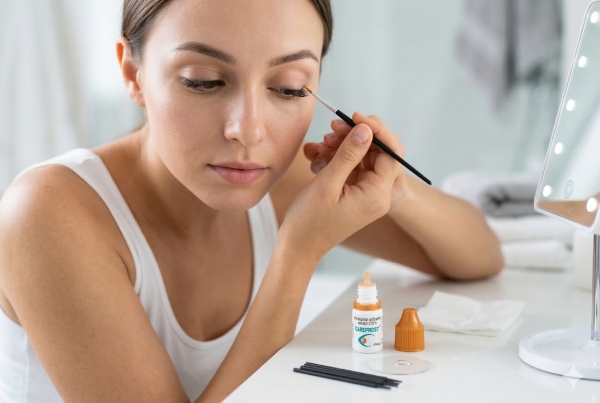
The Fix: Use a thin, sterile eyeliner brush or a dedicated applicator. Draw a single, precise line along the upper lash base, as if you were applying liquid eyeliner. Always blot away any excess liquid with a clean tissue immediately after application.
3. Inconsistency: The Momentum Killer

Skincare is a marathon, not a sprint, and Careprost is the ultimate proof of that. Because Bimatoprost works by extending the “Anagen” (growth) phase of your hair cycle, you have to be consistent to see a change.

The Reality: It takes about 4 to 8 weeks to see the first signs of length, and a full 16 weeks to reach maximum “peak lash.” If you skip three nights a week or forget your bottle when you go on vacation, you are essentially hitting the “pause” button on your progress.

The Consequence: Your lashes will never reach their full potential. They may look slightly better, but you’ll never get that dramatic “wow” effect that comes from 100% consistency.

The Fix: Treat it like brushing your teeth. Keep your bottle next to your toothbrush or your nighttime moisturizer. If you’re a frequent traveler, buy a second bottle specifically for your toiletry bag so you’re never caught without it.
4. The “Dirty Brush” Danger

Since Careprost is often sold in a multi-use bottle, the applicator you use matters just as much as the serum itself. A major mistake is using a dirty, old eyeliner brush or, even worse, the same brush for weeks without cleaning it.

The Reality: Your eyes are incredibly sensitive to bacteria. Using a non-sterile brush can introduce staph or other bacteria into the bottle or onto your eyelid.

The Consequence:

  • Styes and Infections: A clogged follicle or an infected eyelid will force you to stop using the serum altogether while you heal.
  • Contaminated Serum: Once bacteria get inside the bottle, the entire 3ml of product is compromised.

The Fix: Ideally, use disposable, single-use micro-applicators. If you prefer a reusable eyeliner brush, you must wash it with antibacterial soap and let it air dry completely after every single use. Better yet, dip the brush into the lid (after putting a drop there) rather than touching the bottle tip to anything.
5. Expecting “Permanent” Lashes

The most heartbreaking mistake is stopping the treatment once you reach your “goal” length, expecting them to stay that way forever.

The Reality: Careprost does not change your DNA; it changes the environment of the follicle. As soon as you stop applying the Bimatoprost, your lash cycle will eventually return to its natural state.

The Consequence: Within 4 to 8 weeks of stopping, your long, lush lashes will shed naturally, and the new ones growing in will be your “old,” shorter lashes. Many people think their lashes are “falling out” because of the product, but it’s actually just the natural growth cycle resuming.

The Fix: Once you reach your desired length (usually after 16 weeks), move to a maintenance schedule. You don’t need to apply it every night. Most users find that applying Careprost 2–3 times a week is enough to maintain their results indefinitely.
Final Thoughts: Patience is Your Best Ingredient

Careprost is the most “bang for your buck” beauty hack available today, but it rewards the disciplined. If you avoid these five mistakes—don’t over-apply, be precise, stay consistent, keep it clean, and plan for maintenance—you will see results that no mascara can mimic.

Expert Tip: If you experience slight darkening of the eyelid, don’t panic. For many, this is a temporary side effect that looks like a natural “smoky eye” shadow. However, if it bothers you, ensure you are blotting the excess liquid more carefully or reduce your application to every other night.
 

Posted on Leave a comment

Stop Wasting Money: Why Tretinoin Beats Expensive Creams

acne tret

In the world of skincare, it’s easy to be impressed by luxury packaging, celebrity endorsements, and high price tags. Many anti-aging creams promise dramatic results — smoother skin, fewer wrinkles, and a youthful glow. But here’s the truth: price doesn’t always equal performance.

If you truly want visible improvement in fine lines, wrinkles, and skin texture, tretinoin stands in a league of its own.

Let’s break down why tretinoin often outperforms expensive creams — and why it may save you money in the long run.
What Makes Tretinoin So Powerful?

Tretinoin is a prescription-strength retinoid derived from vitamin A. Unlike many over-the-counter “anti-aging” products, it has decades of clinical research backing its effectiveness.

It works by:

  • Increasing skin cell turnover 
  • Stimulating collagen production 
  • Reducing fine lines and wrinkles 
  • Improving uneven skin tone 
  • Fading hyperpigmentation 
  • Preventing clogged pores 

Most luxury creams focus on hydration and surface-level plumping. Tretinoin works deeper — at the cellular level.
Expensive Creams vs. Tretinoin: What’s the Real Difference?

 Marketing vs. Medicine

Luxury creams often charge for:

  • Brand name 
  • Packaging 
  • Fragrance 
  • Influencer campaigns 

While they may contain beneficial ingredients like peptides or hyaluronic acid, their effects are usually mild and temporary.

Tretinoin, on the other hand, is a medically proven treatment. It’s not about branding — it’s about results.
Temporary Glow vs. Long-Term Skin Remodeling

Many expensive creams create an instant “plump” effect due to:

  • Hydrating agents 
  • Silicones 
  • Light-reflecting ingredients 

But once you stop using them, the glow fades.

Tretinoin actually rebuilds collagen over time. That means:

  • Wrinkles soften 
  • Skin becomes firmer 
  • Texture improves 
  • Fine lines reduce gradually 

The results are structural — not just cosmetic.
Cost Comparison: The Surprising Truth

Let’s talk money.

  • Luxury anti-aging cream: ₹5,000–₹15,000 per month 
  • Tretinoin cream: Often significantly less per tube 

And one tube of tretinoin can last months because you only need a pea-sized amount.

Instead of stacking multiple serums and creams, tretinoin simplifies your routine — which saves money long term.
Why Dermatologists Recommend Tretinoin

Tretinoin has been studied for over 40 years. Dermatologists trust it because it:

  • Has strong clinical evidence 
  • Delivers measurable collagen improvement 
  • Treats both acne and aging 
  • Provides long-term skin health benefits 

Very few over-the-counter creams can make the same claims.

The “Purge” and Patience Factor

It’s important to be realistic.

Tretinoin is powerful. In the first few weeks, you may experience:

  • Dryness 
  • Peeling 
  • Mild irritation 

This adjustment period is temporary. With proper moisturizing and gradual use, your skin adapts.

Luxury creams rarely cause irritation — but they also rarely cause transformation.
How to Use Tretinoin the Smart Way

To maximize benefits:

  1. Start with a low strength. 
  2. Apply at night only. 
  3. Use a pea-sized amount. 
  4. Always wear sunscreen during the day. 
  5. Moisturize well to reduce dryness. 

Consistency matters more than quantity.
Who Should Avoid Tretinoin?

Tretinoin is not suitable for:

  • Pregnant or breastfeeding women 
  • People with extremely sensitive skin (without medical supervision) 
  • Those unwilling to use sunscreen daily 

Always consult a qualified healthcare professional before starting any prescription treatment.
The Bottom Line: Invest in Results, Not Hype

Expensive creams often sell dreams in elegant jars. Tretinoin delivers real, science-backed skin improvement.

If your goal is:

  • Fewer wrinkles 
  • Smoother texture 
  • Brighter skin 
  • Long-term anti-aging results 

Then tretinoin is one of the most effective options available.

Instead of spending thousands on trendy products each month, consider investing in a treatment that has decades of proven results.

Posted on Leave a comment

Tretinoin Before and After for Fine Lines and Wrinkles: What to Expect

tret before and after


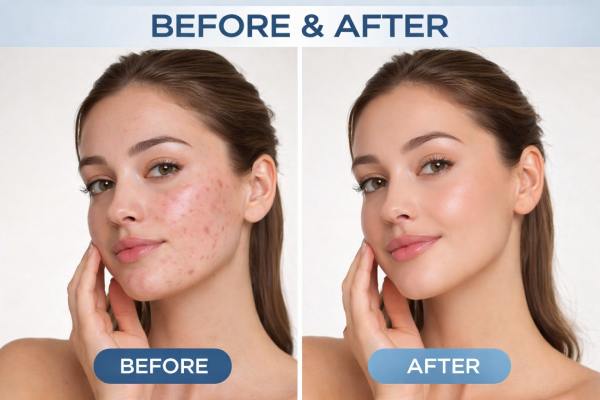
If you’ve searched for real anti-aging results, you’ve likely seen dramatic tretinoin before and after photos online. Many dermatologists consider tretinoin the gold standard for treating fine lines, wrinkles, and sun damage , but what actually happens to your skin over time?

In this comprehensive guide, we’ll break down how Tretinoin works, realistic before-and-after timelines, side effects, and how to maximize results safely.

What Is Tretinoin?

Tretinoin is a prescription-strength retinoid derived from Vitamin A. Unlike over-the-counter retinol, tretinoin is already in its active form, meaning it works faster and more effectively to stimulate skin renewal.

Dermatologists prescribe tretinoin to:

  • Reduce fine lines and wrinkles
  • Improve skin texture
  • Fade hyperpigmentation
  • Treat acne
  • Reverse sun damage

It works at a cellular level to increase collagen production and accelerate skin cell turnover.

How Tretinoin Improves Fine Lines and Wrinkles

As we age, collagen production declines by about 1% per year after our mid-20s. Collagen is what keeps skin firm, smooth, and elastic.

Tretinoin helps by:

  • Stimulating new collagen synthesis
  • Increasing epidermal thickness
  • Improving elasticity
  • Smoothing rough texture
  • Reducing uneven tone

Over time, this leads to visible softening of fine lines and improved skin firmness.

Tretinoin Before and After: Realistic Timeline

One of the most common questions is: How long does it take to see results?

Here’s a realistic timeline:

Weeks 1–2: Adjustment Phase

During the first couple of weeks, you may experience:

  • Redness
  • Dryness
  • Peeling
  • Mild irritation

This is often called the “retinization” phase. Your skin is adjusting to increased cell turnover.

Important: Wrinkles may look worse temporarily due to dryness. This is normal.

Weeks 3–6: Skin Renewal Begins

At this stage:

  • Texture starts improving
  • Skin looks brighter
  • Breakouts may reduce
  • Early fine lines begin softening

Peeling typically decreases as your skin adapts.

Weeks 8–12: Visible Improvement

This is when most people start noticing real change:

  • Fine lines appear smoother
  • Skin feels firmer
  • Pigmentation fades
  • Overall glow improves

Clinical studies show significant wrinkle reduction after 12 weeks of consistent use.

3–6 Months: Collagen Remodeling

Collagen production takes time. Around 3–6 months:

  • Deeper wrinkles soften
  • Skin thickness improves
  • Elasticity increases
  • Sun damage becomes less noticeable

Consistency is key during this stage.

6–12 Months: Long-Term Results

After a year of regular use:

  • Noticeable reduction in fine lines
  • Improved skin firmness
  • Healthier, more resilient skin
  • Even skin tone

This is where true “before and after” differences become dramatic.

What Areas Improve Most?

Tretinoin works best on:

  • Forehead lines
  • Crow’s feet
  • Smile lines
  • Uneven texture
  • Sun-damaged skin

Very deep static wrinkles may soften but typically won’t disappear completely without additional treatments.

Before and After: What Changes Visibly?

Before Tretinoin:

  • Dull complexion
  • Fine lines around eyes and mouth
  • Rough texture
  • Sun spots
  • Uneven tone

After Consistent Use:

  • Brighter skin
  • Smoother surface
  • Softer wrinkles
  • Improved elasticity
  • Fewer dark spots

The transformation is gradual — not overnight.

How to Use Tretinoin for Best Anti-Aging Results

To maximize before-and-after results:

1. Start Slowly

Begin 2–3 nights per week to minimize irritation.

2. Use a Pea-Sized Amount

Applying more won’t speed results — it increases irritation.

3. Apply on Dry Skin

Wait 20–30 minutes after washing before applying.

4. Moisturize Generously

Use a barrier-repair moisturizer to reduce dryness.

5. Wear Sunscreen Daily

Tretinoin makes skin more sun-sensitive. SPF 30+ is mandatory.

Common Mistakes That Delay Results

Many people don’t see improvement because they:

  • Stop using it too early
  • Skip sunscreen
  • Over-exfoliate
  • Use too many active ingredients
  • Apply too much product

Consistency and patience are essential.

Does Tretinoin Work for Everyone?

Tretinoin works well for most skin types, but results vary based on:

  • Age
  • Skin condition
  • Sun damage level
  • Consistency
  • Strength used (0.025%, 0.05%, 0.1%)

Those with sensitive skin may need lower concentrations or slower introduction.

Side Effects to Expect

Common temporary side effects include:

  • Peeling
  • Dryness
  • Redness
  • Sensitivity

These usually improve within 4–6 weeks.

If irritation is severe, consult a dermatologist.

Tretinoin vs Retinol: Before and After Comparison

Over-the-counter retinol can improve fine lines, but results take longer.

Tretinoin:

  • Works faster
  • Has stronger collagen-stimulating effects
  • Produces more dramatic before-and-after results

However, it requires medical supervision.

Can Tretinoin Replace Botox?

Tretinoin improves skin quality and collagen structure. Botox works differently — it relaxes muscles to reduce dynamic wrinkles.

Tretinoin:

  • Improves texture and firmness
  • Reduces static wrinkles gradually

Botox:

  • Provides faster muscle-relaxing results
  • Does not improve skin quality

Many dermatologists recommend tretinoin as a foundational anti-aging treatment.

Who Should Avoid Tretinoin?

  • Pregnant or breastfeeding individuals
  • Those with severe eczema or rosacea
  • People unable to commit to daily sunscreen use

Always consult a licensed healthcare provider before starting.

Final Thoughts: Is Tretinoin Worth It?

When reviewing real tretinoin before and after results, one thing becomes clear — it works, but it requires patience.

If you want:

  • Gradual wrinkle reduction
  • Improved skin thickness
  • Brighter, smoother skin
  • Long-term collagen support

Tretinoin is one of the most evidence-backed options available.

It’s not an overnight solution. It’s a long-term investment in skin health.

With proper use, sunscreen protection, and consistency, the before-and-after difference can be impressive and long-lasting.