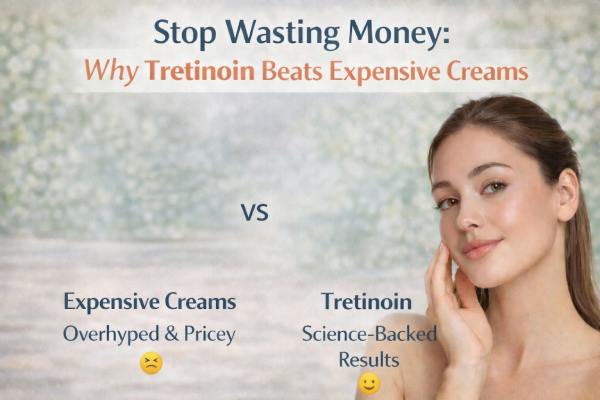
In the world of skincare, it’s easy to be impressed by luxury packaging, celebrity endorsements, and high price tags. Many anti-aging creams promise dramatic results — smoother skin, fewer wrinkles, and a youthful glow. But here’s the truth: price doesn’t always equal performance.
If you truly want visible improvement in fine lines, wrinkles, and skin texture, tretinoin stands in a league of its own.
Let’s break down why tretinoin often outperforms expensive creams — and why it may save you money in the long run.
What Makes Tretinoin So Powerful?
Tretinoin is a prescription-strength retinoid derived from vitamin A. Unlike many over-the-counter “anti-aging” products, it has decades of clinical research backing its effectiveness.
It works by:
- Increasing skin cell turnover
- Stimulating collagen production
- Reducing fine lines and wrinkles
- Improving uneven skin tone
- Fading hyperpigmentation
- Preventing clogged pores
Most luxury creams focus on hydration and surface-level plumping. Tretinoin works deeper — at the cellular level.
Expensive Creams vs. Tretinoin: What’s the Real Difference?
Marketing vs. Medicine
Luxury creams often charge for:
- Brand name
- Packaging
- Fragrance
- Influencer campaigns
While they may contain beneficial ingredients like peptides or hyaluronic acid, their effects are usually mild and temporary.
Tretinoin, on the other hand, is a medically proven treatment. It’s not about branding — it’s about results.
Temporary Glow vs. Long-Term Skin Remodeling
Many expensive creams create an instant “plump” effect due to:
- Hydrating agents
- Silicones
- Light-reflecting ingredients
But once you stop using them, the glow fades.
Tretinoin actually rebuilds collagen over time. That means:
- Wrinkles soften
- Skin becomes firmer
- Texture improves
- Fine lines reduce gradually
The results are structural — not just cosmetic.
Cost Comparison: The Surprising Truth
Let’s talk money.
- Luxury anti-aging cream: ₹5,000–₹15,000 per month
- Tretinoin cream: Often significantly less per tube
And one tube of tretinoin can last months because you only need a pea-sized amount.
Instead of stacking multiple serums and creams, tretinoin simplifies your routine — which saves money long term.
Why Dermatologists Recommend Tretinoin
Tretinoin has been studied for over 40 years. Dermatologists trust it because it:
- Has strong clinical evidence
- Delivers measurable collagen improvement
- Treats both acne and aging
- Provides long-term skin health benefits
Very few over-the-counter creams can make the same claims.
The “Purge” and Patience Factor
It’s important to be realistic.
Tretinoin is powerful. In the first few weeks, you may experience:
- Dryness
- Peeling
- Mild irritation
This adjustment period is temporary. With proper moisturizing and gradual use, your skin adapts.
Luxury creams rarely cause irritation — but they also rarely cause transformation.
How to Use Tretinoin the Smart Way
To maximize benefits:
- Start with a low strength.
- Apply at night only.
- Use a pea-sized amount.
- Always wear sunscreen during the day.
- Moisturize well to reduce dryness.
Consistency matters more than quantity.
Who Should Avoid Tretinoin?
Tretinoin is not suitable for:
- Pregnant or breastfeeding women
- People with extremely sensitive skin (without medical supervision)
- Those unwilling to use sunscreen daily
Always consult a qualified healthcare professional before starting any prescription treatment.
The Bottom Line: Invest in Results, Not Hype
Expensive creams often sell dreams in elegant jars. Tretinoin delivers real, science-backed skin improvement.
If your goal is:
- Fewer wrinkles
- Smoother texture
- Brighter skin
- Long-term anti-aging results
Then tretinoin is one of the most effective options available.
Instead of spending thousands on trendy products each month, consider investing in a treatment that has decades of proven results.